

Digital Transformation: Driving force for Vietnam’s fisheries sector
Practical evidence shows that Vietnam’s fisheries industry has been asserting its position in the economy, with export turnover consistently hitting high marks in recent years. According to the Vietnam Association of Seafood Exporters and Producers (VASEP), Vietnam’s seafood exports in February 2026 reached approximately USD 707 million, an 8% increase year-on-year. For the first two months of 2026, cumulative exports reached USD 1.7 billion, up 20.2%. These results place Vietnam among the world’s leading seafood suppliers.
It can be affirmed that the fisheries sector continues to serve as a pillar of the agricultural economic structure, contributing significantly to export turnover and providing livelihoods for millions of workers, particularly in coastal areas and the Mekong Delta.
Despite inherent advantages and potential, Vietnam’s fisheries industry faces numerous challenges. Specifically, climate change is becoming increasingly complex, directly impacting aquaculture environments and natural aquatic resources. Disease outbreaks in aquaculture are on the rise, and production costs are climbing. Meanwhile, export markets are continuously tightening standards regarding traceability, food safety, and Illegal, Unreported, and Unregulated (IUU) fishing.
To address these emerging challenges, a key solution recently prioritized by the industry is promoting Digital Transformation in aquaculture management, procurement, preservation, transportation, and traceability.
Furthermore, significant investments—from both enterprises and state management agencies—are being directed toward applying scientific and technological solutions to farming and ensuring the water quality and environment of farming regions.
“Digital transformation and high-tech application can be seen as the key solution to enhancing the industry’s competitiveness,” stated a representative from KLC Seafood Joint Stock Company (KLC Seafood). “In other words, digital transformation is opening up great opportunities for Vietnam’s fisheries to improve management capacity, increase production efficiency, and gradually participate more deeply in the global value chain”.
According to Vo Minh Son (MSc), a fisheries expert based in Ho Chi Minh City, the industry is also actively promoting the application of Artificial Intelligence (AI) in line with global trends.
“Integrating AI—specifically Machine Learning and Deep Learning algorithms—along with Big Data, IoT sensor systems, and Automation into the farming process allows for real-time environmental monitoring, disease forecasting, and production optimization,” said Mr. Son, “The application of high technology in general, and AI and digital transformation in particular, is a breakthrough direction that contributes to cost reduction and enhanced efficiency for the fisheries sector”.
Mr. Vo Minh Son further noted that digital transformation in aquaculture is the process of applying digital technologies throughout the entire value chain—from production and processing to distribution and consumption. Instead of relying solely on traditional experience, digital transformation helps farmers shift to “data-driven management” to optimize efficiency and minimize risks.
As a new chapter opens for Vietnam’s fisheries, digital transformation and high-tech applications are set to become the primary engines of growth. These advancements will enable the sector to bolster competitiveness, maximize value, and break into new international markets
________________________________________
Core components of Digital Transformation in Aquaculture:
• Digitization and Smart Monitoring: Utilizing IoT sensor systems to continuously monitor environmental parameters such as dissolved oxygen, pH, salinity, and temperature in real-time. This data is transmitted to smartphones or computers, allowing for remote farm management.
• AI and Big Data Analytics for Decision Making: Artificial Intelligence (AI) and Big Data help analyze trends, provide early warnings for disease risks, and offer precise recommendations on feed quantity or harvest timing. For example, AI can detect early abnormal signs in fish and shrimp before a major outbreak occurs.
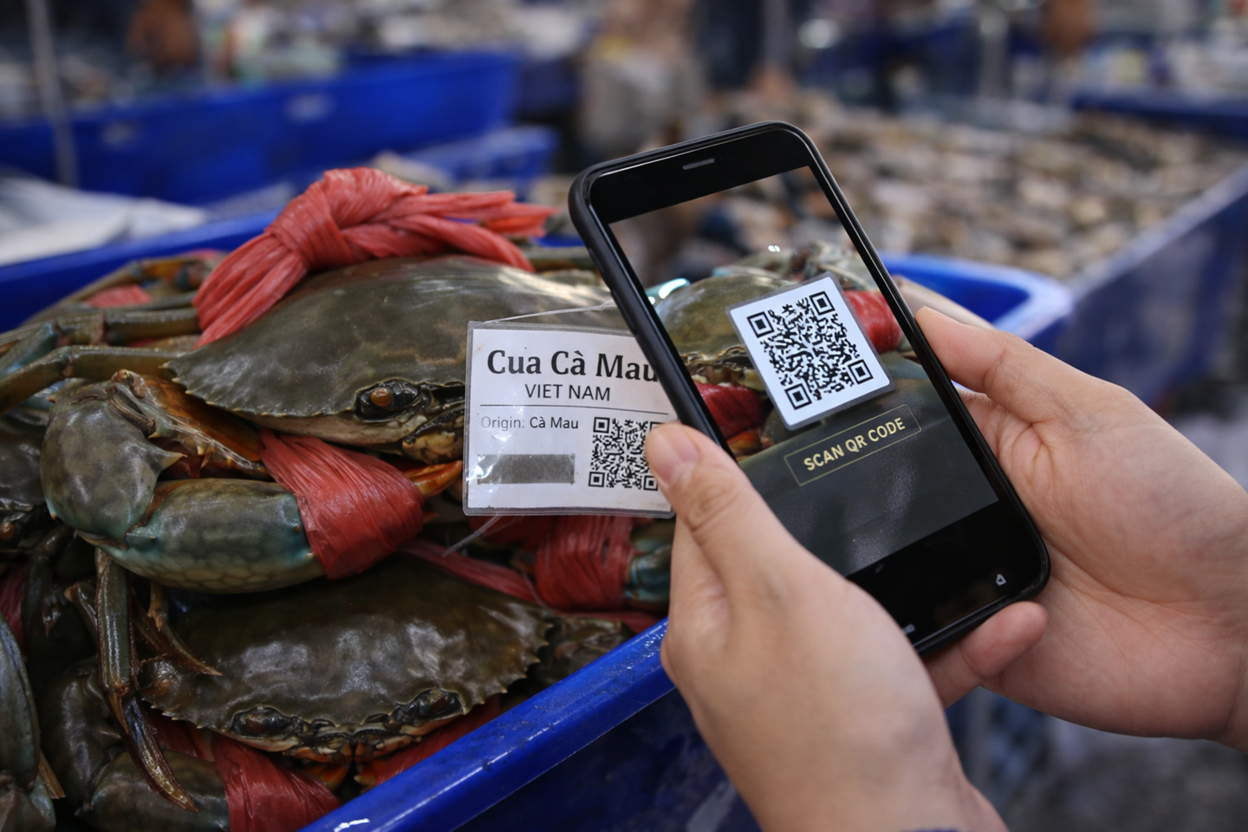
• Traceability and Transparency: Applying Blockchain technology and QR codes to electronic production logs. This identifies products from the farm to the table, meeting the stringent standards of export markets like the EU, US, and Japan.
• Value Chain Connectivity: Creating e-commerce platforms and online trading floors to directly connect farmers with processing enterprises and consumers, reducing dependence on intermediaries.
